The U.S. Sudan Bill
Port Sudan - Private
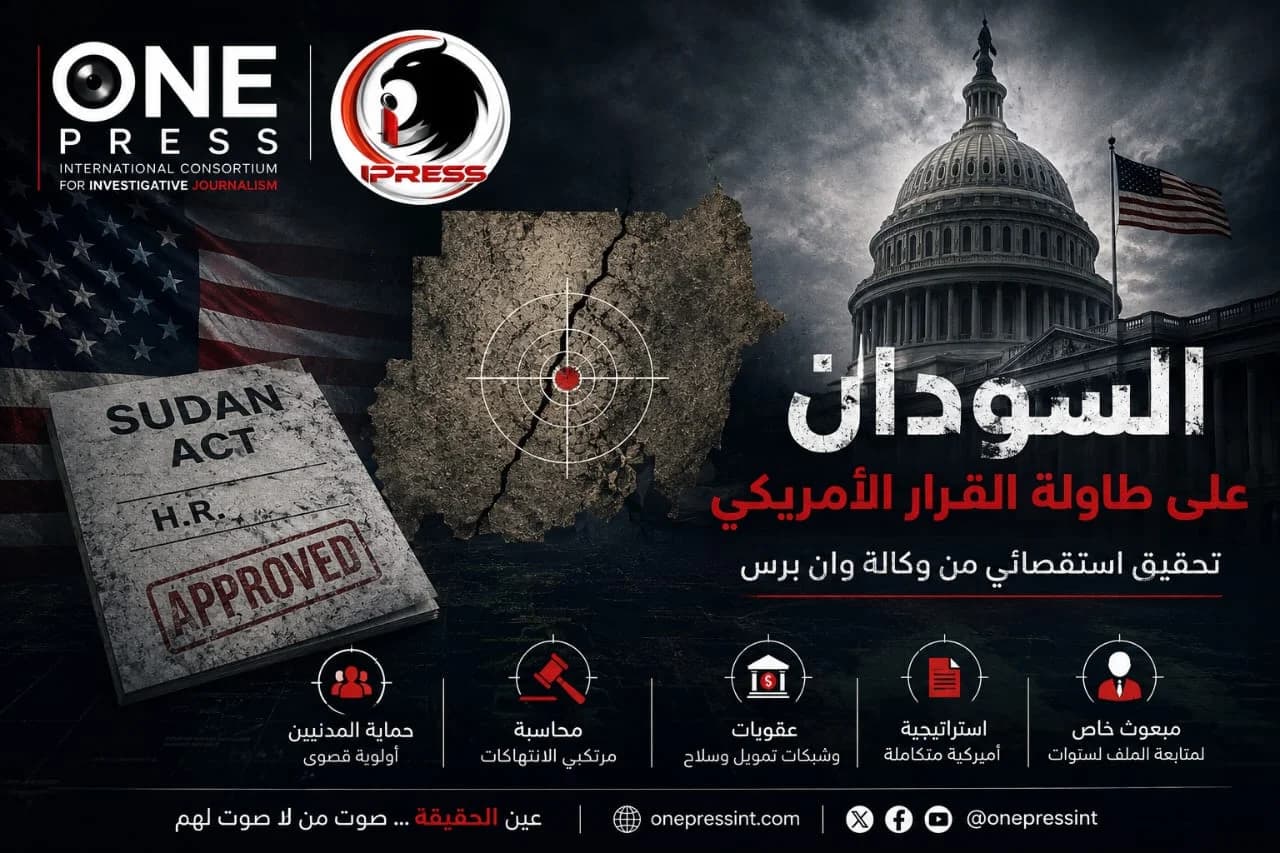
The US House of Representatives Foreign Affairs Committee voted overwhelmingly on Sudan’s bill, with 44 votes in favor and only two votes against. This vote revealed that Sudan has officially moved to the strategic file circle inside Washington, and that the Sudanese war has become part of the US national security calculations, not just a distant humanitarian crisis.
Within Congress, laws are made according to precise calculations of interests, influence, security, energy, and international alliances. The draft law is therefore part of a broader vision to reorder the Sudanese file politically, security and economically in the post-war period.
The question now is:
Which Sudan is Washington working on? Who will have the decision in the next phase?
▁* First scene ▁*
Since the Salvation Government came to power in 1989, Sudan has not left the international operations rooms. The blockade began early with Sudan’s inclusion in the terror list in 1993, and then the country embarked on a long series of international projects with different titles, but they all met at one point: the re-engineering of the Sudanese state.
Economic sanctions came under the banner of fighting terrorism, drying up the economy and weakening institutions. Naivasha came under the rubric of peace, ending with the secession of the South. The international missions came under the banner of protecting civilians, turning into a long political and security presence inside the country. Then came the democratization projects, the constitutional document, the framework agreement, the quartet and the negotiating platforms, while the state was retreating step by step in the face of the expansion of external intervention.
Every time Sudan entered the negotiations from the position of defense, and the intervention of international powers from the position of those who have the vision, plan and tools. Over time, the country has become an open space for political, security, and economic experimentation, while Sudan’s interior has remained mired in conflict, division, and the absence of an inclusive national project.
Pain. Second scene ▁*
The new U.S. bill moves within this full context. Texts circulating within Congress reveal a long-term lobbying project going beyond the current war. The project talks about protecting civilians, holding those involved in violations accountable, imposing sanctions, monitoring arms flows, tracking funding networks, establishing an official U.S. strategy toward Sudan, and establishing a U.S. special envoy to follow the file for years.
These clauses reveal that Washington views Sudan as a long-standing dossier related to regional security, maritime corridors, and international conflict in Africa. The United States is not only moving to a ceasefire, but to build permanent pressure tools within the Sudanese file that allow it to influence the balance of political, economic and military forces during the next phase.
The most dangerous part of the American project is that it targets not only individuals, but entire networks associated with war, the economy and weapons. The proposed sanctions target military leaders, companies, banks, gold networks, trade intermediaries, and arms suppliers. Washington recognizes that controlling the economy is more dangerous than controlling the cities themselves, so sanctions often turn into tools to reshape the balance of power within a country by pressuring banks, remittances, investment, and the movement of foreign trade.
If these sanctions expand, their effects will not remain confined to military camps, but will reach markets, the currency rate, the banking sector, and the daily lives of citizens. This is where the war begins to shift from a field battle to an open, long-term economic battle.
Pain. Scene three ▁III
Today, Sudan is part of a wider regional and international conflict. The Red Sea has become one of the most sensitive corridors in the world, and the Horn of Africa has become an arena of competition between the United States, Russia, China and other regional powers seeking to consolidate their military and economic influence.
At the heart of this landscape is Sudan, with its resources, borders and geographical location, while international projects and shifting alliances are competing. Sudan’s complete collapse means a direct threat to international shipping, regional security, energy, migration and trade.
This is why the world no longer treats the Sudanese war as an internal affair, but as an open geopolitical file that touches the balances of the entire region.
▁Last Last scene ▁Last
As the people of Sudan say: “The house of the different Ahlu... with the strange entrance.”
Sudan is facing the most dangerous moment in decades. The world is moving quickly to rearrange the region, and the big countries are always filling the voids that countries themselves are unable to protect. The real problem is no longer just outside, but inside Sudan, which for years has been mired in division, conflict, weak institutions and a lack of national vision.
States are protected not by slogans, but by strong institutions, smart foreign policy, and the ability to manage crises from within before they are managed from without. Sudan now needs a state mind, not a temporary battle mind, and a national project that prevents others from writing the country’s future on its behalf.
History has no mercy for countries that lose control of their decision, and does not wait long for capitals weary of conflict, powerlessness and division.
Awadullah Nowai – Director of OnePress