Port Sudan: OnePress
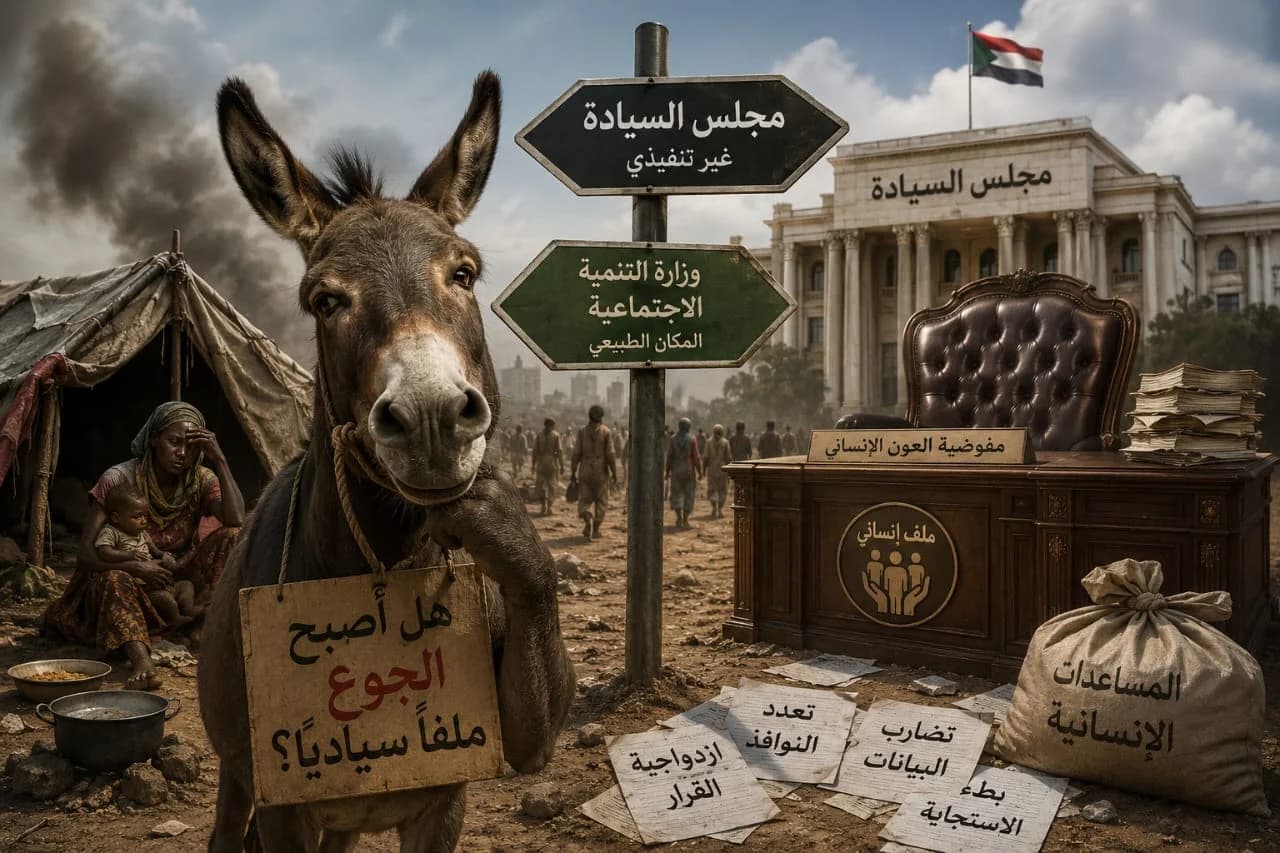
▁Home I asked my mother-in-law one evening when the country was counting its displaced more than its employees, and I had seen a woman carrying a child fighting with the wind at the door of a torn tent, while an elegant employee of one of the institutions explained through an air-conditioned screen “multi-track humanitarian response strategy.” I said to Hamri, Mary.Hey, my donkey, how is our country producing displaced people faster than wheat?’ Why is our hunger more regulated than the state itself? He laughed until he almost fell, and then he said: My friend, in Sudan hunger is not just a crisis... but a stand-alone institution, with colorful statements, statements, workshops and slogans, but sometimes forget to feed the hungry himself. Even our displacement has a protocol, structure and high committees, while the owner of the tent has only a wet blanket and a miserable cup of tea to drink on the promise of relief coming three months ago.
I said to Hammari: But I do not understand how the Humanitarian Aid Commission moved from the Ministry of Social Welfare to the Sovereignty Council? Isn't UNHCR an operational humanitarian body? My mother-in-law looked at me with an expert eye on the state’s pain and said, “My friend, this question alone needs a national committee, three workshops and a long concluding statement that answers nothing. Since when has hunger become a sovereign issue? When did corn sacks, NGO requests, and relief permits turn into an institution that the constitutional document itself says is not an executive body? The country no longer seems to be merely managing politics, but has also decided to manage hunger from the top sovereign floor.
▁I said... I told Hammari: But the Humanitarian Aid Commission has been affiliated for decades with the ministries of social affairs, development and social welfare, because its nature is linked to the displaced and social protection and relief and disasters. He said: This is the natural logic in any reasonable country, but our problem is that some of our institutions are sometimes transferred not according to the nature of their competence, but according to the nature of the influence that surrounds them. Then he added in a cynical tone: When institutions become chess pieces in politics, don’t be surprised to find that the tent file is closer to the Sovereign Council than the Ministry of Social Welfare.
I said to him: What is the problem if the state wants to tighten control over the humanitarian file? My donkey paused and said, “This is where the real disaster begins.” The international community and humanitarian organizations do not view with satisfaction the proximity of humanitarian action to political and sovereign institutions. Humanitarian action needs to be neutral, while politics is inherently biased and fraught with conflict. And when relief is mixed with influence, the big questions begin to emerge: Who is managing the aid? Who controls the organizations? Has humanity become part of the balance of power?
West Hamri went on to say: What is strange is that the separation of the Commission from the Ministry of Social Welfare has created a state of administrative fragmentation. The ministry talks about social protection, displaced people and voluntary return, while UNHCR manages relief, organizations and aid. The poor displaced people now revolve between institutions as the citizen rotates between the windows of electricity, water and passports. In the end he finds only a new seal, a new paper and a new promise.
Before leaving me, my donkey turned around and said his last sentence: My friend, the most dangerous thing that afflicts countries is not only hunger, but that their institutions lose their natural meaning. When the Sovereign Council becomes preoccupied with relief bags and permits of organizations, while social files are lost between ministries, know that the state is no longer run by the logic of jurisdiction, but by the logic of control. So don’t just ask, where did the police go? Ask the most painful question: Who restructured hunger itself?
Awadullah Nowai – Director of OnePress