
Filed to:OnePress
Closure Announcement
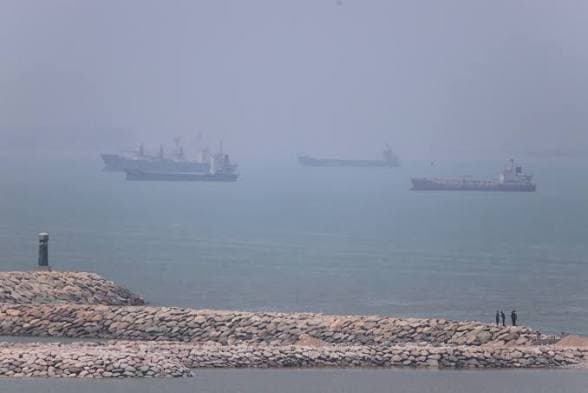
In the early hours of Sunday, July 12, 2026, the Iranian Revolutionary Guard Navy announced the closure of the Strait of Hormuz “until further notice,” stressing that no ship would be allowed to pass through it. The official statement, carried by Iranian state media, Reuters and Xinhua, justified the decision by saying that several ships tried to cross through an “unauthorized route”, ignoring repeated warnings, which necessitated warning fire on one of them that led to its injury and stop. Tehran said the move represented "illegal foreign interference" in the Strait's navigation.
Context: Fragile Deal Collapses
The development follows a memorandum of understanding signed on June 17 to end a nearly four-month war between Iran and the United States, but the agreement has remained fragile from the start. Recent weeks have seen a series of escalating incidents: rocket and drone attacks on oil and gas tankers near the strait, including the Qatari gas tanker Al-Raqqat, and two tankers carrying the Saudi and Qatari flags. In response to these attacks, US Central Command (CENTCOM) carried out new strikes targeting about 90 Iranian military positions, in what was described as the third round of US strikes in one week. U.S. President Donald Trump also renewed his threat to use force, saying the two sides “will either reach an agreement or finish the job.”
Is the door really closed?
Despite the severity of the Iranian statement, field data indicate a more complex picture than a “complete shutdown.” The U.S. Navy’s Joint Maritime Information Center, in an advisory note issued on Sunday, said Oman’s southern route in the strait remains open to navigation in both directions, stressing the readiness of U.S. forces to protect freedom of navigation in accordance with international law, noting that the level of security threat remains “severe.” This comes in the context of an Omani proposal, which has not yet been finalized, to manage navigation through two separate corridors: southern passes through Omani territorial waters and remains open freely as it was before the war, and northern passes through Iranian waters and requires prior approval from Tehran without fees.
Simultaneous diplomatic action.
The escalation came in conjunction with the visit of Iranian Foreign Minister Abbas Araqchi to Muscat, where he discussed with his Omani counterpart Badr Al Busaidi ways to ensure the safety of navigation. Earlier, the Washington Post quoted U.S. officials who expect Iran to make a formal announcement in the coming days to fully reopen the strait as it pledges to stop targeting ships as part of broader negotiations for a Qatar-brokered peace deal. However, the latest attack on the Cypriot ship GFS Galaxy came, according to US sources quoted by Axios, instead of the expected announcement that Washington was waiting for from Tehran.
Impact on energy markets
The escalation returned the “geopolitical risk premium” to the oil markets. After a string of sporadic attacks on ships over the past week, Brent and West Texas Intermediate crude prices have risen repeatedly, with analysts such as Saxo Bank’s First Hansen warning that any further escalation could push prices towards the $75 and then $80/barrel mark. The strait is particularly sensitive because it handles more than a quarter of the world’s seaborne oil trade and about a fifth of the world’s liquefied natural gas trade, according to the U.S. Energy Information Administration, with Saudi Arabia leading the list of exporting countries. In a sign of concern from Gulf states, sources familiar with the matter said Riyadh was considering expanding the capacity of its oil pipeline to the Red Sea to reduce dependence on the strait.
Discourse conflict
The announced closure represents a new test of the fragility of the truce between Washington and Tehran, amid a conflict between the hard-line Iranian rhetoric and the continuation of actual navigation through the southern corridor under American protection. The coming months will depend on the course of Omani and Qatari negotiations, with fears that any new slide could prolong turmoil in one of the world’s most important energy arteries, particularly for the more fragile economies of Lebanon, Iraq, and Syria in the face of any energy price shock.