
OnePress
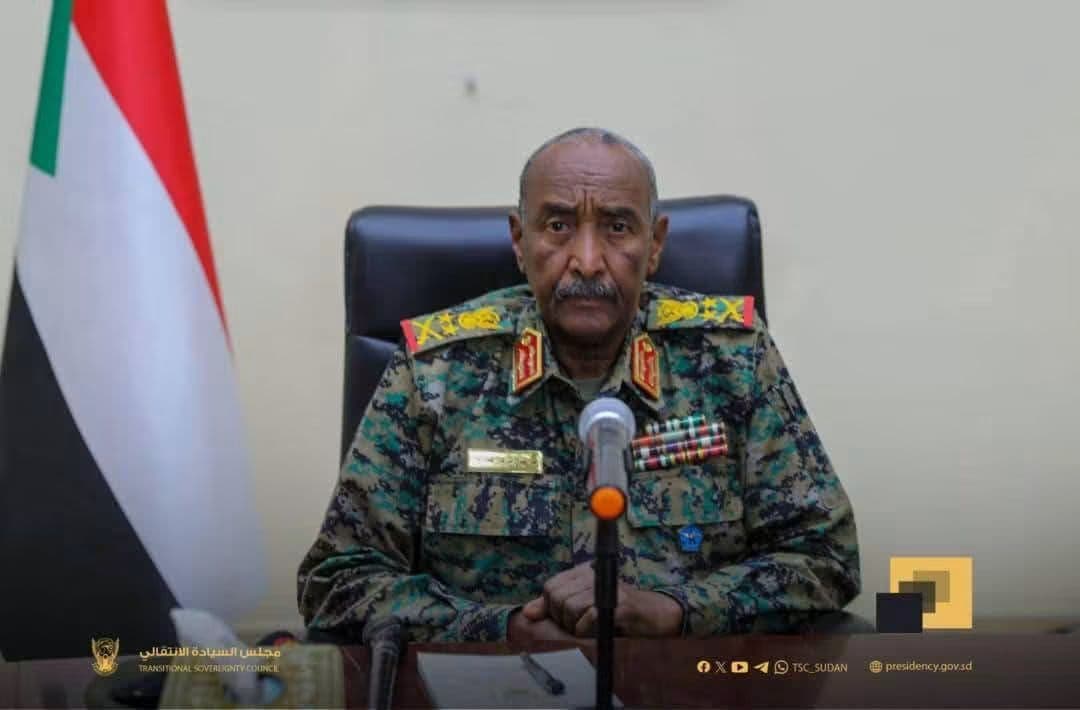
– General Abdel Fattah Al-Burhan, Chairman of the Transitional Sovereignty Council, will lead Sudan’s delegation to participate in the third Russian-African summit to be held in Moscow from October 28 to 29.
The delegation of Sudan includes the Ministers of Foreign Affairs and Finance, the Director General of the Intelligence Service and the Director General of the Defense Industries System. The head of the Sovereign Council will address the summit, meet bilaterally with his Russian counterpart, and visit the Russian State University of Human Sciences.
Ambassador Mohamed Al-Ghazali Al-Tijani Siraj, Sudan's ambassador to Russia, said that Sudan's participation at the high level in the summit's activities and bilateral relations between the two countries are witnessing development in all fields, cooperation and close coordination, especially in international forums.
Through its recent support for Sudan, Russia has proven its credibility and commitment to the guiding principles of its foreign policy, which is based on non-interference in the internal affairs of countries, and building relations on the basis of common interest, without exploitation or conditionalities, and respect for the sovereignty and territorial integrity of countries, adding that Russian support for Sudan remained based on these principles and Russia was one of the first countries to confirm Sudan's sovereignty and legitimate institutions, and is fighting a war.
“Russia’s recent stance against attempts to expand the scope of resolution 1591 to include sanctions on the entire Sudanese territory is a testimony to this, which are honorable positions that have remained consistent and consistent throughout the crisis in Sudan,” he said.
Ambassador Al-Ghazali added that the importance of Sudan’s participation in this summit comes through the role that Russia can play in the reconstruction phase of Sudan, as the Intergovernmental Committee for Economic and Commercial Cooperation has been meeting regularly, and Russia was the first country with which a ministerial committee was held after the outbreak of war in September 2025, and the protocol of the eighth session of the Committee provided a clear road map for an important and constructive role in the reconstruction phase in a number of projects in the fields of energy, oil, mining, agriculture, infrastructure, higher education and other fields.
The two countries are celebrating this year the 70th anniversary of the establishment of diplomatic relations, which were characterized by common will, often, and solid and steadfast through the work of the leadership in the two countries to promote them to reach advanced stages of development and partnership in all fields.
Al-Ghazali said that the participation of General Abdel Fattah Al-Burhan is gaining importance and Sudan is moving steadily and resolutely, supported by the strength and will of its people and armed forces and support to stabilize the pillars of the state and its unity and maintain its institutions and prevent foreign interference in its affairs through the successive victories achieved by Sudan against the terrorist militia and its regional and international supporters. He pointed out that Sudan has proved that the will of the people is invincible and that falsehood, no matter how long it takes to disappear, is an important content in an international forum that provides the opportunity to reflect this honorable model of unity, cohesion and solidarity against the enemies of the homeland.
He explained that the deep meanings and implications will be included in Sudan's speech, which will be delivered by His Excellency the President before the leaders and international and regional organizations, reviewing Sudan's vision to achieve peace and stability for its people and preserve its sovereignty and unity.
On the implications and objectives of the summit, Sudan's ambassador to Russia told Sona that the third Russian-African summit is being held in light of a sharp regional and international polarization, Russia seeks in light of the retreat of the international system from the foundations and pillars of the United Nations Charter to present itself as the godfather of a multipolar international system. The Russian vision of its African relations can be viewed from this perspective, in which Africa finds an opportunity to build good relations that are not subject to political blackmail, through which it leads its countries towards development, renaissance and development, through its dealings with Russian proposals for stability and development.
According to the information available, more than 36 heads of state and government confirmed their participation in the summit.
On the agenda before the summit, he pointed out that it will discuss the Russian-African partnership relations through three draft documents before the leaders, namely the declaration of the Russian-African summit, the declaration on cooperation in the civil use of artificial intelligence technologies, as well as the plan of action of the Russian-African partnership for the years 2027-2029.
These documents deal with the contents of Russian-African cooperation and its promotion in all fields. The Political Declaration of the Summit focuses on various political, economic, legal and security aspects, in the fields of education, science, health, environment, governance and other areas.
The draft plan of action stressed the strengthening of the Partnership Forum as an institutional framework and mechanism to move forward in the Russian-African partnership and to continue dialogue and hold ministerial conferences on a regular basis to expand consultations and coordinate positions bilaterally and in international forums.
The plan focused on important topics such as cooperation in the field of digital economy, development of trade and tourism, systematic digitization of natural resources and the importance of the state’s self-reliance and economic development in Russia and African countries, and providing the necessary support to African countries to help their efforts to achieve balanced development in accordance with the continent’s Agenda 2063 (Africa We Want).