
OnePress
The Council of Ministers of the Government of Hope handed over, on Tuesday, the state of Khartoum a number of new mechanisms and equipment, in support of the sanitation sector and rehabilitation of infrastructure and restoration of basic services, and compensation for mechanisms and equipment damaged during the war.
The green square was recognized in the presence of Khartoum Governor Ahmed Osman Hamza, where the equipment was handed over by Minister of Infrastructure and Transport Saif al-Nasser al-Tijani Haroun, Federal Minister of Agriculture and Irrigation Mutassim Qureshi, and Minister of Human Resources and Social Development Mutassim Ahmed Saleh, representing the Minister of Finance and Economic Planning, as well as a number of members of the state government.
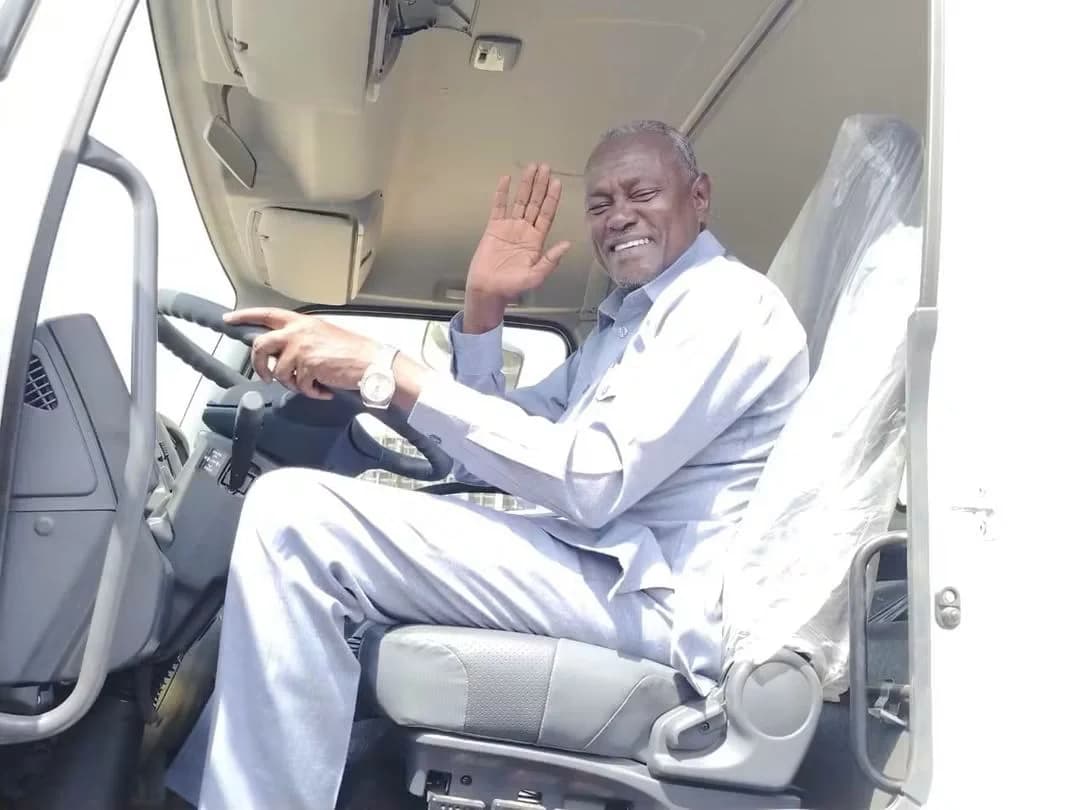
The equipment included 10 sewage suction trucks, 10,000 linear meters of electrical cables, electrical applications for the rehabilitation of sewage plants, a crane, two tanks, and a number of tow trucks, vans, lodestones and supporting equipment.
The Minister of Infrastructure and Transport said that the provision of mechanisms is the result of joint work between state institutions to support development and reconstruction efforts, pointing to the continuation of similar initiatives in different states of Sudan.
For his part, the Federal Minister of Agriculture and Irrigation said that the equipment comes as part of efforts to restore vital services and projects damaged during the war, stressing the importance of integrating roles between the federal government, the state government and the private sector to accelerate the reconstruction of Khartoum.
The Governor of Khartoum expressed his appreciation for the support provided by the Government of Hope, pointing out that the mechanisms will contribute to supporting the work of creating the environment and improving the level of services provided to citizens.
He explained that the sanitation sector is one of the main challenges in the state, noting that large parts of the sewage network in Khartoum date back to the 1960s, and no longer accommodate urban expansion and population increase.
He stressed the need for the network to be modernized and expanded according to engineering plans that respond to current and future needs, taking advantage of water recycling and wastewater treatment techniques, thus contributing to environmental protection and rationalizing resources.