
Review – OnePress
Sudan has again come to the attention of the international media on Sunday, amid rapid military and humanitarian developments, at a time when the war appears to be entering a more complex phase with the transfer of the weight of operations to the province of Kordofan and the widespread use of drones to new areas, coinciding with a new wave of displacement of more than 200,000 people.
Today’s international coverage cuts across a single picture: the Sudanese war is no longer confined to traditional frontlines, but is gradually taking a more expansive form, overlapping ground operations, marching warfare, humanitarian crisis, and regional spillovers.
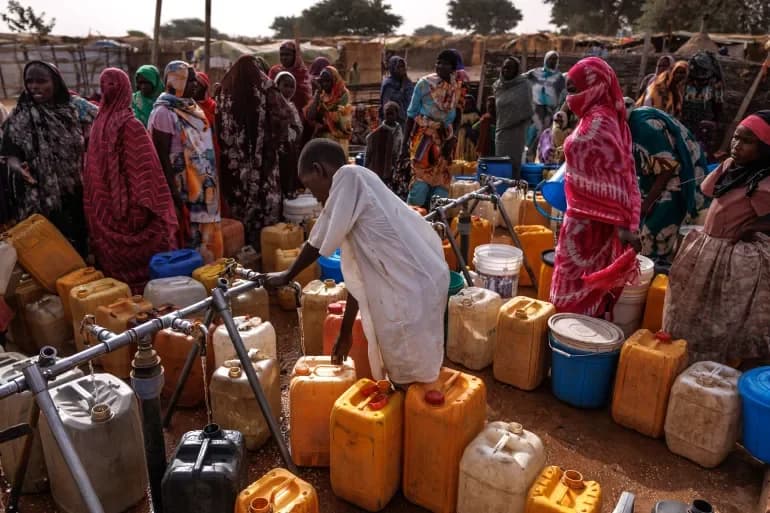
More than 200,000 displaced people in Kordofan
The most significant humanitarian development in international coverage has been the UN’s declaration that more than 200,000 people have been displaced in Kordofan since fighting escalated late last year.
Escalating violence has exacerbated the humanitarian crisis and driven increasing numbers of civilians from their areas, with basic services deteriorating and vital facilities targeted or damaged.
The International Organization for Migration (IOM) has announced that the number of newly displaced people in Kordofan has exceeded 219,000, with the number of displaced people increasing by 65% since February 2026.
The capital city of North Kordofan is emerging as one of the most sensitive points of recent developments after vital facilities, including those linked to electricity and water, have been repeatedly attacked.
International coverage indicates that the spread of fighting in Kordofan threatens to turn the region into a major hub for the humanitarian and military crisis in the next phase.
The Marching War
In parallel with displacement, drones occupy an increasing space in international coverage of the Sudanese war.
U.N. figures cited by Reuters in May indicate that drone attacks have become a leading cause of civilian deaths. According to data from the Office of the United Nations High Commissioner for Human Rights (OHCHR), at least 880 people were killed in drone attacks between January and April 2026, with about 80 percent of conflict-related civilian deaths recorded as a result of these attacks.
Reports indicate that Kordofan was one of the areas most affected by this type of attack, at a time when marches have become a major tool in military operations on both sides of the war.
Reuters reported on August 12 that the city of al-Obeid was attacked by eight drones, prompting the army’s air defenses to counter them, and the attack, according to medical sources quoted by the agency, killed two people and wounded others.
Driving from Ethiopia
In a new development that expands the regional dimension of the war, the Sudanese Defense Ministry announced on Sunday the shooting down of a drone it described as "hostile" in the state of Blue Nile in the southeast of the country.
The ministry said the drone had entered Sudanese airspace from Ethiopian territory, while at the time of publication there had been no comment from the Ethiopian authorities on the Sudanese accusation.
The incident is of particular importance because it occurred in a highly sensitive border area, and comes after growing fears that the Sudanese war is spreading and interfering with security developments in neighbouring countries.
The Sudanese declaration alone does not imply proof of the origin or operator of the aircraft, which makes the determination of responsibility for the incident need additional independent information.
Kurdufan... The new center of gravity of the war.
Kurdufan increasingly appears in international reports and analysis as one of the most important arenas of the current war.
The region is strategically located between army-held areas in central and eastern Sudan and the areas of influence of the Rapid Support Forces in Darfur, and represents an important route towards the capital and other areas of the country.
As fighting continues around El Obeid and other areas in North and South Kordofan, the expansion of operations there threatens to create new waves of displacement, as well as increase pressure on cities that receive people fleeing areas of fighting.
Recent analysis suggests that the war has entered a new phase as the center of the confrontation has moved more towards Kordofan and Blue Nile, after Khartoum witnessed a major change in the map of control over the past year.
Civilians at the heart of the threat
Military developments are inseparable from the escalating civilian price.
In July, the United Nations Children’s Fund (UNICEF) said that at least 23 children had been killed and 25 wounded in North Kordofan in two months, as attacks and military operations continued in the area.
The United Nations has repeatedly warned that attacks on civilian infrastructure and displacement sites are making it harder for humanitarian aid to reach people.
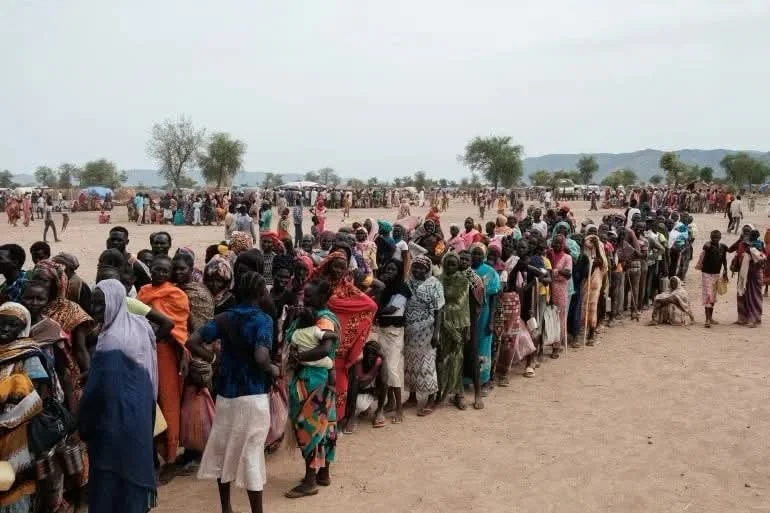
This comes at a time when Sudan is facing one of the world’s largest displacement crises, with data from the United Nations and its partners indicating that more than 12 million people have been displaced since the outbreak of war in April 2023, including millions of internally displaced people and refugees in neighboring countries.
The regional dimension is becoming clearer.
Development on the Ethiopian border brings back fears of spillover from the Sudanese war to neighboring countries.
Sudan intersects geographically and security with seven countries, and the war has a direct impact on refugee movement, borders, trade and supply routes.
Developments in eastern Sudan and the Blue Nile are particularly significant because of their proximity to Ethiopia, at a time when the region itself is experiencing overlapping security and political tensions.
International reports and analysis have warned that developments in the conflict in Ethiopia could intersect with the Sudanese war and create more complex regional dynamics.
The war is entering its fourth year with a deepening humanitarian crisis.
While the map of fighting is changing, the humanitarian crisis has not abated.
The United Nations estimates that more than 25 million people in Sudan are in need of humanitarian assistance, while relief operations face severe funding shortfalls and significant security and logistical difficulties.
The situation is becoming more serious as food insecurity persists, health and education services are damaged, and the ability of humanitarian organizations to reach areas of greatest need is reduced.
International reports have warned that Sudan is facing one of the largest humanitarian crises in the world, at a time when the volume of international funding is not commensurate with the size of needs.
The international scene: from internal war to a regional crisis
International coverage of Sudan in recent weeks reveals a clear shift in the nature of the handling of the war.
The news no longer focuses only on the battles between the Sudanese Armed Forces and the Rapid Support Forces, but more on:
Use of drones and long-range weapons.
– Moving the battle center towards Kordofan and Blue Nile.
New waves of displacement.
Targeting of civilian infrastructure.
Ways of getting humanitarian aid.
The potential role of regional states in the war.
The Impact of Conflict on Neighboring Countries.
This means that Sudan is gradually shifting from an internal crisis to a more complex regional security and humanitarian file.
Needles Covers
The most prominent international coverage of Sudan today reveals three parallel tracks: a military escalation in Kordofan, an expansion in the use of marches, and a broad humanitarian aggravation.
While the displacement of more than 200,000 people from Kordofan is the latest sign of the widening humanitarian cost of the war, a dramatic fall in the Blue Nile after it entered, according to the Sudanese narrative, from Ethiopia, adds a new regional dimension to the scene.
Continued drone attacks indicate that the very nature of war is changing; Ground fronts alone no longer determine the course of battles, but the sky has become a major part of the battlefield, with civilians paying the highest price.
Thus, the question posed by international coverage is no longer just: Who controls this or that region? But also: To what extent can the war expand geographically, and to what extent can the humanitarian system keep up with successive waves of displacement?