
Filed to:OnePress
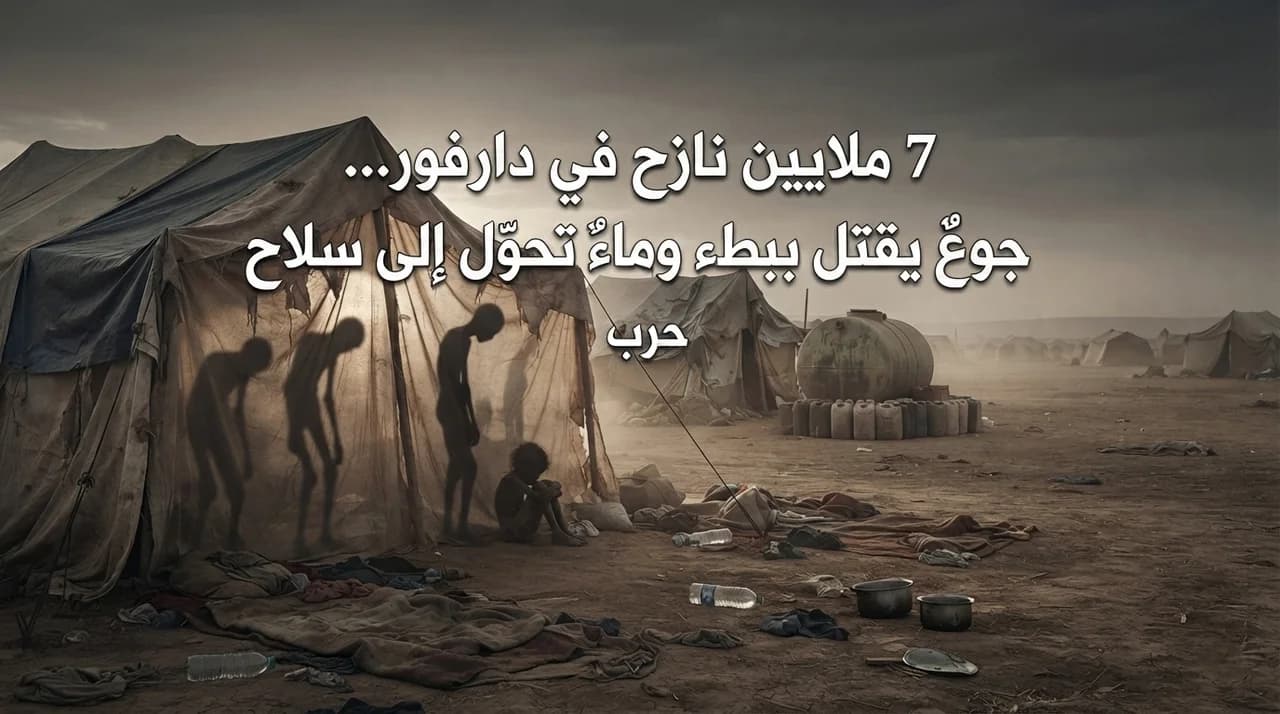
The displacement camps in the Darfur region of western Sudan are one of the most serious humanitarian crises in the world today, with more than seven million displaced people on the brink of total humanitarian collapse, amid soaring commodity prices and widespread epidemics in an environment that lacks basic sanitation and clean water.
These figures and details were revealed by the General Coordinator of Displaced Persons and Refugees in Sudan, which stressed that the situation in the camps “exceeded the limits of human possibility,” in light of the continued mass displacement and the spread of diseases that threaten the lives of millions and the future of future generations.
Seven million displaced. Markets are collapsing.
Field estimates indicate that the total number of displaced people in Darfur exceeds seven million people, distributed among dozens of camps, with the continued influx of new numbers due to the ongoing fighting and the spread of epidemics. South Darfur tops the list of the most displaced states, followed by North Darfur, Central Darfur, West Darfur and East Darfur.
Exploding prices: Millet jump 300% in months
The coordination revealed shocking figures showing the scale of the collapse of living inside the camps. The price of millet and corn has jumped from 4,000 Sudanese pounds in January to between 15,000 and 18,000 pounds now, an increase of nearly 300%. The price of a kilogram of meat also rose from EGP 7,000 to EGP 2,000 to EGP 12,000, while the price of sugar and salt doubled by 100%, and the price of an oil bottle and a piece of soap increased by 250% each.
The coordination attributed this price explosion to several factors: the blockade of major roads between cities and camps, the collapse of the agricultural season due to lack of rain and seeds, in addition to the exploitation of some traders of the crisis in the absence of any government control. The coordination accuses the warring parties of using food as a “weapon” to block aid to civilians, as the Sudanese pound continues to collapse against foreign currencies.
Added to this is the enormous pressure that mass displacement places on already resource-limited local markets, the destruction of roads, bridges and warehouses by war, the curtailment of humanitarian activities by insecurity, monopolistic networks controlling the distribution of goods, and droughts and floods that have weakened agriculture and pastoralism.
Children of Darfur. Bodies that kill with wasting.
The data of the coordination reveals a tragic reality that affects children in particular, with some 4.2 million children in Sudan suffering from acute malnutrition during the year 2026, including more than 825,000 children under the age of five suffering from severe acute malnutrition. These figures represent an increase of 7% compared to 2025 and 25% compared to pre-conflict levels. Between January and March 2026 alone, around 100,000 children were admitted for treatment of acute malnutrition.
Water is a weapon of war. Epidemics take lives.
The General Coordinator describes the destruction of water sources by drones as a deliberate diversion of water into a “weapon of war,” which has directly contributed to an outbreak of cholera and typhoid inside the camps. Measles, malaria, acute diarrhoea and respiratory diseases are also prevalent, with most health facilities out of operation, amid an environment in which epidemics are exacerbated with each rainy season by contaminated water sources and stagnant rainwater piled up in cramped tents.
The coordination confirms that the camps suffer from structural deprivation of sanitation systems and clean water, which is jointly responsible for the state and international organizations, in the absence of political will and sufficient funding to address this chronic file.
Urgent call. The international response is disproportionate.
The Coordinator calls for an urgent and multidimensional humanitarian intervention, including a cessation of hostilities, the opening of safe humanitarian corridors, and increased international funding, warning that the blockade and ongoing attacks on humanitarian convoys, along with the scarcity of funding, make aid access a daily challenge.
While noting that it has received some responses and promises from international actors in recent weeks, the Coordinator describes them as “well below the magnitude of the disaster”, calling on the United Nations, the African Union and donors to take immediate action and to hold armed parties using the blockade as a tool of war, along with tribal violence and weak international funding, directly responsible for the deterioration of the humanitarian situation.
“Figures are the closest picture to reality.”
In its response to those who question the accuracy of its statistics, the Coordinator explains that the difference in numbers between the concerned authorities is possible due to the varying monitoring tools and the timing of data collection, but she stresses that what she publishes is “the closest picture of reality,” and that her goal is not to exaggerate or minimize the suffering, but to document the truth as experienced by the displaced themselves, stressing that the reality of children suffering wasting lives, women facing death during childbirth, and families lacking food and medicine, does not need to enter into an urgent debate.
The statement concluded by calling on the international community to translate the concern into urgent practical steps to protect civilians and ensure unhindered access to food and medicine, warning that continued international silence will not be neutral, but indirect participation in prolonging the tragedy.