
Review – OnePress
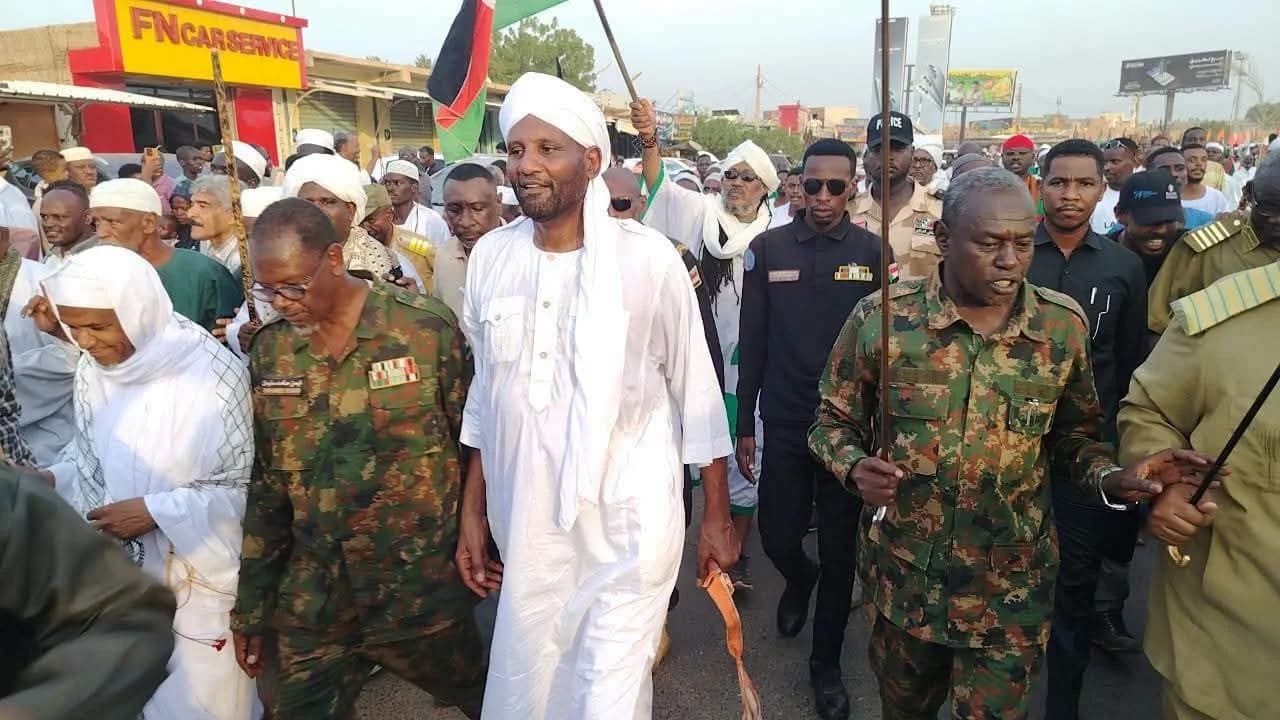
After three years of absence imposed by the aftermath of the war, Zefeh al-Mawlid al-Nabawi al-Sharif returned to the streets of Khartoum and Omdurman, returning to the capital a scene that for years had been part of her religious and social life.
In a number of neighborhoods, banners and flags returned to the facades, and illuminated the courtyards of mosques and Khalawi, while the prophetic praises and the voices of the male and prayer rose, in celebrations that restored the usual presence amid the participation of citizens.
The manifestations of the celebration were not limited to the holding of rituals and events within mosques and Khalawi, as they extended to the squares and streets, where zafats were held and Sufi roads and citizens were gathered, and food and drinks were distributed to participants and passers-by, in a tradition that remained linked to the Prophet's birth in Sudan.
Omdurman is getting her poop back.
In Omdurman, the city witnessed the launch of the Prophet's birthday with the participation of 92 Sufi ways, at the beginning of the celebration program.
The event was attended by the Governor of Khartoum Ahmed Osman Hamza, the Executive Director of Omdurman Saifuddin Mukhtar, and the Director of the General Department of Religious Affairs in the state Dr. Tariq Abdullah, along with Sufi road elders, devotees and citizens.
It set off from the northern district and toured a number of Omdurman streets before reaching the Khalifa Square, restoring a tradition that has been present in the city's memory for decades.
The Governor of Khartoum congratulated the citizens on the occasion, pointing out that the participation in Zefah reflects the place of the occasion in Sudanese society and the love of citizens for the Holy Prophet.
Al-Wali linked the return of celebrations to the gradual recovery witnessed by the state of Khartoum, in light of the return of services and institutions to work in a number of localities, expressing his hope that the next generator will come and Sudan has overcome the repercussions of the war and citizens have returned to their areas and homes.
He also called for ensuring the continuation of electricity in the celebration fields, so that the events can continue well.
92 ways to celebrate
The CEO of Omdurman Municipality explained that the celebration of the birth has religious and social dimensions, pointing to the participation of 92 Sufi ways in Zefah, as well as the establishment of celebration tents and the provision of necessary services for participants.
For his part, the Director of the Directorate General of Religious Affairs in the state said that the activities of the birth aim to commemorate the birth of Al-Mustafa peace be upon him, through the recitation of the Holy Quran, prophetic praises, mention and prayer, as well as praying for security and stability in Sudan.
In the same context, the representative of Sufi ways called for the promotion of the values of coexistence and the rejection of hate speech and regionalism, stressing the need to be inspired by the values of justice, equality and solidarity established by the Prophet's biography.
He said that the participation of the various components of Omdurman in the celebration confirms the commitment of the community to this occasion, expressing the hope that the atmosphere of security and stability will extend to all states and localities of Sudan, and that cities and villages will regain their usual social life.
More than a religious event.
In Sudan, the Prophet’s birthday is not only a religious occasion, but it is also associated with a wide range of social life.
On such days, the squares around the mosques and Khalawi are transformed into gathering places, celebration tents are spread out, flowers are taken out onto the streets, while praises are high, male rings are held and food and drinks are distributed.
In Khartoum and Omdurman in particular, these manifestations were associated with the memory of the city, where processions used to pass through neighborhoods and streets and stop in front of mosques and Khalawi, amid wide participation of citizens and Sufi roads.
Therefore, the return of Zafeh not only means the resumption of seasonal activity, but also represents the return of one of the scenes that were absent from public life in the capital during the war years.
The war stopped a tradition that people used to.
The war that broke out in April 2023 led to the cessation or decline of many social, religious and cultural activities in Khartoum, coinciding with the displacement of large numbers of residents, disruption of services, closure of institutions and the decline of street movement.
For three years, the capital has been spared many aspects of life, including public celebrations of religious and social events.
With the gradual improvement of conditions in a number of areas and the return of some services and institutions, public life began to reappear, including the resumption of celebrations of the Prophet's birthday.
Citizens believe that the return of these events gives them an opportunity to restore communication, which was weakened by years of war, and to revive the manifestations of solidarity, compassion and brotherhood that have been associated with religious events in Sudanese society.
The Joy of Return and the Memory of War
While some of the streets of Khartoum and Omdurman were filled with the sounds of praise and mention, the war remained present in the memory of the participants.
The occasion comes at a time when the effects of war are still present in many details of life, while citizens carry memories of the past three years and the accompanying displacement, loss and wide changes in their lives and societies.
For many, therefore, the return of the festivities seemed more than a religious event; It is also a moment to reclaim something from a life that has stalled, and a window that they hope will lead to a wider return to cultural, social, and religious activities.
Khartoum residents hope that the circle of stability and services will expand, that more events will return to the squares and streets, and that the capital will gradually regain its features that were absent from the war.
Between the banners of the Zefah and the sounds of praise and mention rings, Khartoum and Omdurman this year are regaining a scene that was missed for three years, in a return in which the joy of the religious occasion is mixed with the memory of the war, and the hope of citizens that the return of the birth will be a prelude to the return of life to the streets of the capital more broadly.