
White _ OnePress
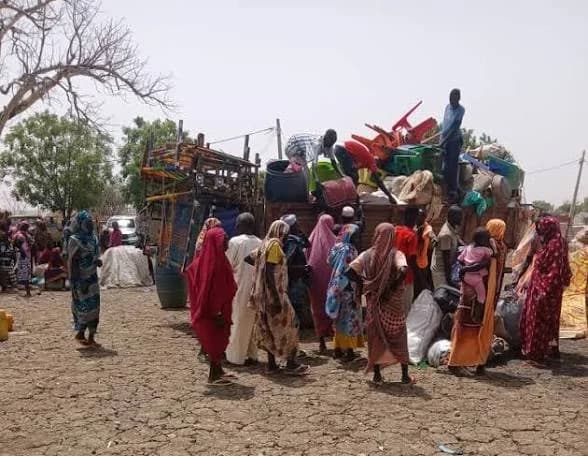
UN Women has warned of a dangerous escalation in violence against women and girls in the town of El Obeid in Sudan’s North Kordofan state, with women facing a deadly dilemma: drone attacks targeting water sources by day, and sexual violence lurking in the dark. The pattern is almost identical to what I documented in El Fasher over the past year, warning that women can no longer find a safe hour to go fetch water.
Food, health and other basic needs are being suffocated, particularly in displacement sites, as the rainy season approaches its peak next month, raising the risk of waterborne diseases spreading. These risks have already begun to materialize, with the World Health Organization recording 1,330 cholera cases in Sudan in early July. Malnutrition, which weakens the vulnerability of women and girls, increases their vulnerability to these diseases, with limited access to health care.
An impossible trade-off between two dangers.
It quoted women and girls in al-Bayda as saying that air strikes targeting water points and sources of distribution during the day prompt them to wait until nightfall to fetch water, believing that night provides protection from shelling. However, this option exposes them to another equally deadly risk, as they fall victim to harassment, rape and other forms of sexual violence in pursuit of the most basic human right: water.
Sexual violence as a tool of war
Throughout the three years of the Sudanese war, sexual violence has been a systematic tool and a prominent feature of this conflict. The number of women and girls in need of services to respond to gender-based violence has quadrupled since the war began, reaching 12.7 million in 2026.
Women’s organizations on the verge of collapse
Local women’s organizations, supported by UN Women, are a lifeline to humanitarian response in Sudan, often reaching communities that are inaccessible to others. However, severe cuts in humanitarian funding have strained their capacity to act: two-thirds of these organizations have reported closing or significantly reducing safe spaces and services to address gender-based violence, while half report that they may have to suspend or close altogether over the next year without urgent financial support.
Renewed internationalist demands
UN Women reiterates its call for an immediate ceasefire that paves the way for comprehensive peace negotiations to end the war, while ensuring safe and unhindered humanitarian access and full respect for international humanitarian and human rights law. She also stressed the need to hold perpetrators accountable and provide survivors with access to justice and integrated support services.
The Commission called for the full, safe and effective inclusion of women in peace processes, humanitarian decision-making, and recovery and reconstruction efforts, stressing that increasing investment in women-led organizations is an urgent necessity, as it is one of the last remaining lines of defense and protection for women and girls across Sudan.