
Documenting the War at Sudan's Smallest Gate on Ethiopia
Filed to:OnePress
Official statement confirms the fall of the last strongholds of the rebellion in the Blue Nile
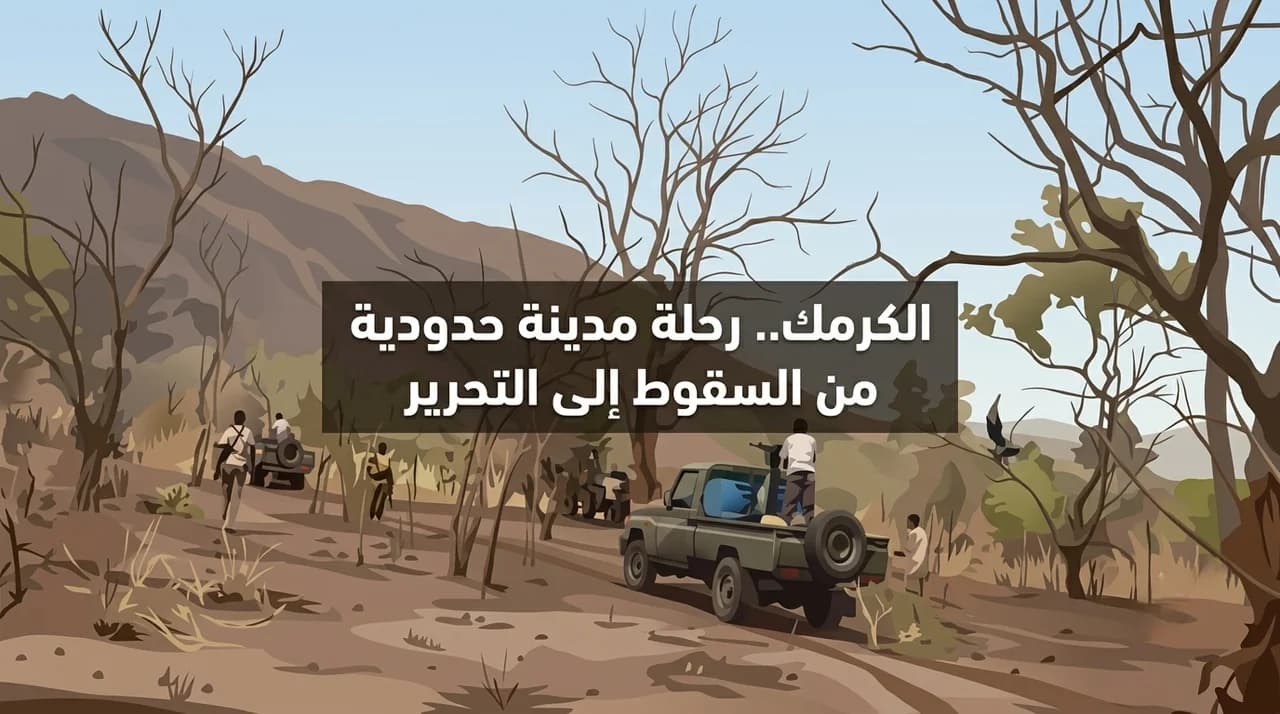
The General Command of the Sudanese Armed Forces, on Wednesday, July 8, 2026, issued an official statement confirming the liberation of the city of Karmuk in the state of Blue Nile in full, after battles described by the statement as "evil", during which the Rapid Support Militia suffered large losses of lives and equipment, before its remnants withdrew from the city leaving behind weapons and vehicles.
The official statement saluted the people of Karmuk and neighboring areas for their steadfastness during the period of control of the Rapid Support Militia, pledging that the protection of civilians, the restoration of basic services and the creation of an atmosphere for the return of displaced people will be a top priority for the next phase. He also reiterated the continuation of military operations until the full restoration of territory that remains outside the control of the state.
This statement is the culmination of a series of convergent field announcements over recent days; It was preceded on July 3 by an announcement by the commander of al-Bara’a bin Malik’s brigade, al-Masbah Abu Zaid Talha, to “liberate” the city, and then Colonel Ebadi al-Taher al-Zain, commander of the southern Blue Nile front, announced it was restored today through a personal publication celebrating the victory of his forces. The statement of the General Command is the solemn and decisive confirmation that ends the state of anticipation that has prevailed since the army took control of the last belts surrounding the city, foremost of which is Sercom and Muqaja.
After about one hundred and sixteen days under the control of the Rapid Support militia and its ally the Sudan People’s Liberation Movement-North (SPLM-N), led by Abdul Aziz al-Hilu, since its fall on March 24, 2026, Karmuk has turned into a new chapter in its flamboyant history. The following is a chronological record of what happened in this border town from the outbreak of the Sudanese war in April 2023 until its liberation today.
Your generosity. A small town with a big location.
Karmak is a small border locality in the southernmost part of the Blue Nile region, separated from Ethiopian territory by a bridge only a few meters long. Despite their small size, they are of great strategic importance; It is located on one of the main roads between Damazin, the state capital, and the south-eastern regions of the Sudan, and is a vital transit point for trade and population movement towards Ethiopia.
Blue Nile has a long history of armed conflict dating back to the 1980s, when the Sudan People’s Liberation Movement (SPLM) led by John Garang took it as a bastion of armed opposition against successive governments in Khartoum. After the secession of South Sudan in 2011, SPLM-North factions remained engaged in sporadic fighting with the Sudanese army in Blue Nile and South Kordofan, before this conflict was relatively mitigated in the following years by fragile truce agreements that did not last long.
War arrives late to the territory.
When war broke out between the Sudanese army and the Rapid Support Militia in mid-April 2023 over disagreements over the integration of the militia into the military and power-sharing, the Blue Nile region remained relatively untouched by the major battles that ravaged Khartoum and cities in the country’s centre and west. However, the calm did not last; As the war expanded, the clashes reached the outskirts of the province and spread to towns within it such as Shammar to the north and Bout to the west, while Damazin remained under intermittent siege after the fall of the neighboring city of Sanja, the stronghold of the 17th Infantry Division of the army.
Since January 2026, the SPLM-N, allied with the Rapid Support Militia, has begun mounting attacks on the towns of Kurmuk, Kaisan and Bau, accompanied by drone strikes targeting these border towns close to South Sudan and Ethiopia. International reports described the escalation as an attempt to open a parallel front that would relieve pressure on the Rapid Support Forces in the Kordofan front. Slowly, these skirmishes developed into extensive battles, culminating in March 2026.
Fall of Karmak: March 24, 2026
March 2026 marked the most turbulent security moment in Blue Nile history since the outbreak of war. On 24 September, after heavy fighting, the Rapid Support Militia (RSM) and SPLM-N declared full control of the city of Kurmuk, along with the surrounding areas of Al Baraka and Al Kili. The commander of the 16th Army Infantry Brigade confirmed the withdrawal of his troops from the city after several attempts to repel the attack failed.
Field announcements of the attacking coalition followed; On the same day, the SPLM-N declared control of Khor al-Budi after decisive battles, and then the Rapid Support Forces announced on March 26 that they had taken control of the area of Maqqa, while the coalition also took control of the town of Jurrat in the vicinity of Karmak and seized quantities of weapons and ammunition. On 31 March, the SPLM announced deaths and injuries in an army drone attack on the Angeli area.
In contrast, the Sudanese army announced on March 5 that two defectors from the SPLM-N in Blue Nile joined its ranks, in a sign of divisions within the rebel alliance, later reversed by talk of two separate factions of the movement, one led by Abdul Aziz al-Hilu and the other led by Joseph Toka.
Mass displacement and a worsening humanitarian crisis
The fall of Karmak left a massive exodus. On 26 March 2026, the Blue Nile Humanitarian Emergency Room announced the displacement of tens of thousands of the city’s residents towards Damazin and nearby areas, mostly women and children, amid accounts of displaced women walking the road in extreme conditions. The following day, the Qesan Emergency Room announced the displacement of large numbers of its residents in search of safety.
According to preliminary estimates quoted by Al Jazeera, more than 500 families have been displaced from the city center, distributed among camps in several towns in the province, while about 2,000 people remain stranded who were unable to reach safe areas due to the fierce fighting. By May 2026, an additional 30,000 people were reported to have been displaced by renewed attacks, bringing the total number of displaced people from and around Karmuk to about 73,000, and later reports of another 4,650 people displaced from the locality in May alone.
Sudan Doctors Network warned that displaced people face dire humanitarian conditions in shelters, with epidemics, severe food and water shortages and deteriorating health services. As the rainy season approaches in July 2026, field correspondents have monitored deteriorating conditions in Damazin camps, including the “Karama 3” camp, which alone has about 3,000 families living in tents and fragile huts that cannot cope with the wind and rain, amid fears of the spread of diseases and poisonous reptiles. However, the governor of Kurmuk denied that cholera cases were recorded among the displaced people until early July.
The Battle for Recovery: A Timeline of Military Operations
Since the fall of Karamuk, the military command has pledged to retake it, and the army chief of staff, General Yasser al-Atta, has visited the province and pledged reinforcements to retake areas under the control of the Rapid Support Forces. The recovery process came gradually, through a series of positional battles:
– 9 May 2026: The army, through the 4th Infantry Division and the supporting forces, announced the liberation of the al-Kili area, located on the outskirts of al-Karmuk in the southern axis, after battles against the Rapid Support Militia and Joseph Toka’s forces. The Damazin witnessed mass marches to celebrate victory. On the same day, the SPLM-N announced its control of the towns of Dukan, Keren Keren and Khor al-Hassan near Kurmuk, confirming its advance towards the city of Kaysan, in a sign that the battle remained on the sidelines.
– 24 May 2026: The armed forces announced the “complete cleansing” of the al-Baraka area on the outskirts of al-Karmuk, after destroying a number of military equipment of the militia and causing losses to the forces of Joseph Toka, in an extension of a series of operations that included the restoration of Keren Keren and Dokan.
– **31 May 2026**: The governor of Kurmuk announced that the armed forces destroyed the advanced defenses of the Rapid Support Militia and the Popular Movement in the areas of Baraka, Khor al-Qana and Khor Halabiya, pointing out that a few hours separate the army from the liberation of the entire city. He then revealed the scale of the systematic sabotage that affected the city during the rebels’ control, including hospitals and water stations, as well as looting of its market and the property of its residents.
– Early July 2026: The army announced the liberation of the areas of Sirkom and Muqqa, located close to Karmak, in operations described as decisive, which resulted, according to army data, in dozens of deaths and injuries in the ranks of the Rapid Support Militia and the destruction of dozens of combat vehicles and ammunition stores within Karmak itself.
– July 3, 2026: Commander of the Baraa Bin Malik Corps, al-Masbah Abu Zaid Talha, announced via social media platforms that al-Karmak was “completely liberated,” without immediate official confirmation from the army general command at the time.
– **8 July 2026**: Colonel Colonel Ebadi Tahir al-Zain, commander of the southern Blue Nile Front, announced the restoration of full control of the city through a personal publication, before the General Command of the Sudanese Armed Forces issued on the same day an official statement confirming the liberation of Karmuk “strongly and ably,” describing the battles that preceded the decision as “fierce,” and confirming heavy losses to the Rapid Support Forces in lives and equipment before the withdrawal of Flo.
In parallel with the battle of Kurmuk, other fronts in the country witnessed similar developments, most notably the restoration of the army and the joint forces of the city of Kulbus and the locality of Abu Qamra in Western Darfur, reflecting a broader pattern of attempts by the army to restore the field initiative in more than one region at the same time.
What remains after the silence of the cannons
With the release of the official release of Karamuk, the challenges facing the city and its residents remain no less daunting than the military battle itself. The statement of the General Command itself recognized that restoring basic services and creating conditions for a return to normal life was a priority for the next phase, implicitly acknowledging the scale of destruction left by months of occupation; The city's hospitals, health centers and basic water stations have been vandalized and its central market has been subjected to extensive looting of citizens' property.
In contrast, tens of thousands of Karamuk people are still living in protracted displacement in Damazin and neighboring cities, in camps that lack the most basic living conditions, amid warnings of worsening health and humanitarian conditions with the onset of the rainy season. The most important question remains: when and how can these displaced people return to their homes safely, in the shadow of a city in need of comprehensive reconstruction, and in light of the military leadership’s confirmation of the continuation of the “Battle of Dignity” on other fronts of the country that has not yet ended.