
Copyright One 2019 OnePress
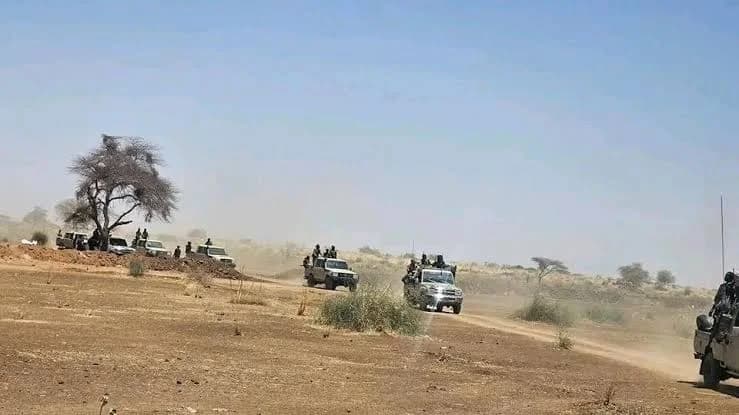
The Sudanese Armed Forces and the Joint Force of the Armed Struggle Movements, with the support of the Popular Resistance Units, announced the complete liberation of the Kulbus locality of West Darfur from the control of the Rapid Support Militia, in a large-scale military operation officially announced on Monday, June 29, 2026.
The announcement was made through simultaneous statements by the Joint Force, the West Darfur State Government, the Darfur region and the Popular Resistance Command, giving the event great political and military weight in the context of the ongoing war.
Documented field results
The official spokesman of the Popular Resistance, Abu Bakr Ahmad Imam, revealed in a detailed military statement the size of what the joint forces have gained during this process, as they managed to capture fifteen combat vehicles with all their equipment, as well as the destruction of twelve others, and control of two ammunition stores and military equipment. The most notable outcome of the operation was the capture of Brigadier General Saleh Dodin, commander of the Rapid Support Militia in the Kulbus area, accompanied by 21 members of his forces.
The Kulbus area was playing a pivotal logistical and recruitment role for the Rapid Support Forces, serving as a reception center for thousands of cross-border elements and a recruitment point for foreign fighters, as well as a key arrival point for supplies coming from the city of El Geneina. This logistical context lends Kulbus liberation significance beyond its immediate geographical value.
Position of the military and political leadership
The spokesman of the joint force, Major Mutawakkil Abuja, said that the liberation of Kulbus represents a strategic step within continuous operations aimed at extending the sovereignty of the state on its territory, pointing out that the forces continue to secure the city and its surroundings while continuing to pursue the retreating villas.
On the political level, the governor of West Darfur state, General Bahr al-Din Adam Karama, declared in an official statement the liberation of the city, describing the achievement as “a milestone” in the course of ongoing military operations. The Governor pledged that the operations would not stop there, but would continue until the restoration of the entire state of West Darfur, considering Kulbus a strategic starting point for future operations.
In the same context, the governor of the Darfur region, Minni Arko Minnawi, praised what he described as the high fighting spirit and popular support that strengthened the steadfastness of the forces, sending a warning message to the militia, citing the words “If you see prominent tusks do not think that the Lith is smiling,” in a sign of the forces’ determination to continue operations on other fronts.
Humanitarian warnings and field repercussions
In the midst of the military announcements, the joint force issued a warning to civilians in areas near the theater of operations, calling on them to stay away from military objects and remnants to preserve their lives during the combing phase and establish security control. The warning reflects the scale of the humanitarian fallout from military operations in an area of conflict-affected civilian communities.
The Importance and Meaning of Editing
Kulbus has a very important geographical location in West Darfur, as it is located in a hub that connects it to El Geneina, the capital of the state, which has been experiencing continuous tensions since the outbreak of war in April 2023. The statements of the Popular Resistance explicitly indicate that the capture of Kulbus “brings forces closer to the liberation of the city of El Geneina,” suggesting that this operation may be a prelude to a broader military phase in Western Darfur.