
Khartoum – OnePress
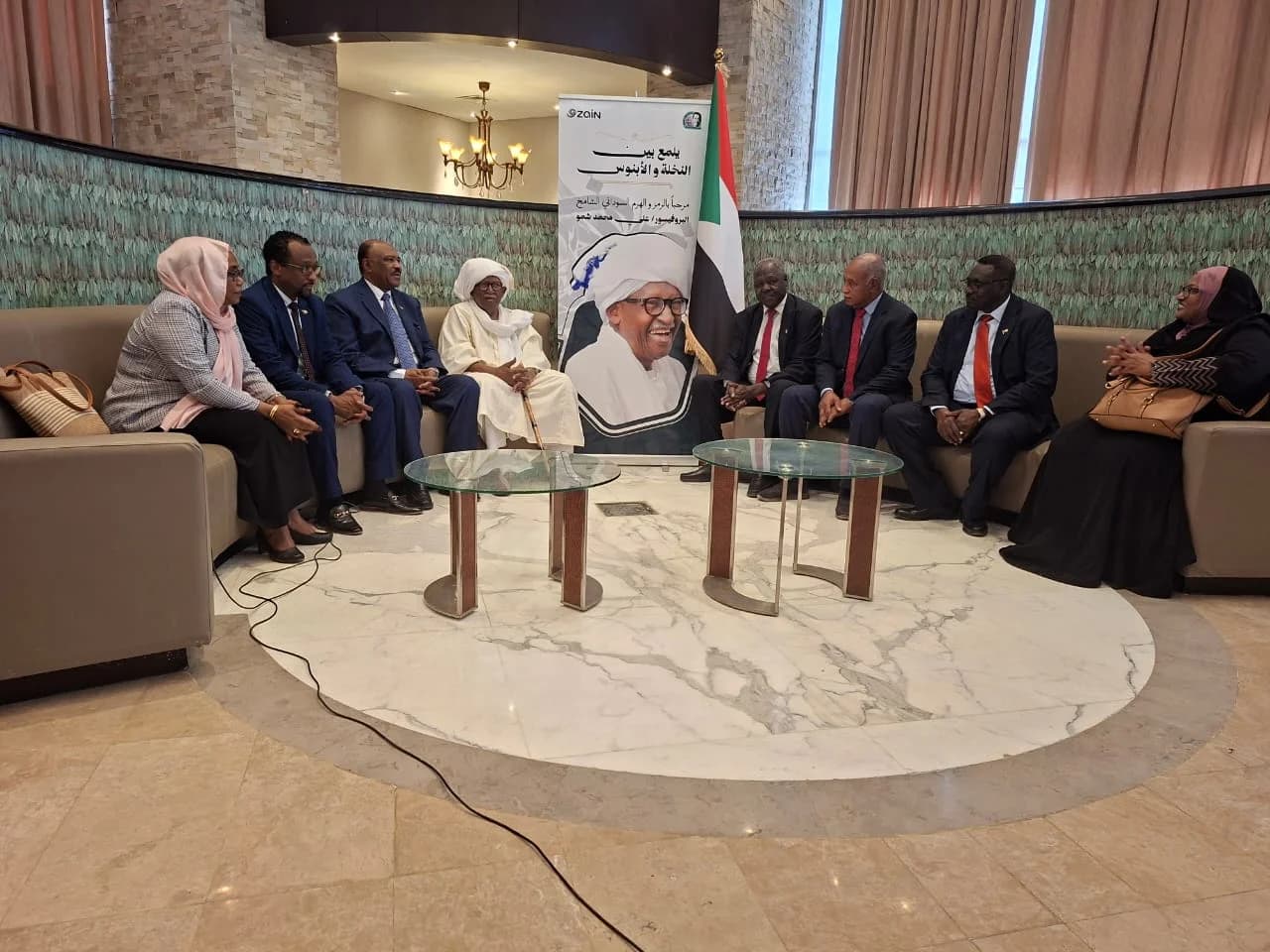
The Minister of Foreign Affairs and International Cooperation, Ambassador Muhyiddin Salem, and the Minister of Culture and Information, Mr. Khaled Al-Iseer, received at Khartoum International Airport, the national symbol and the media pyramid, Professor Ali Shammo, following his return to the homeland after an absence of more than two years due to the war sparked by the rebel Rapid Support Militia.
The reception was held in the presence of the Undersecretarys of the Ministry of Culture and Information. Graham Abdul Qader and Professor Sumaya Al Hadi, along with the Chairman of the Board of Trustees of the Tayeb Saleh Award and a crowd of media leaders, to celebrate one of the most prominent icons of culture, media and the first generation in the country.
The Minister of Information stressed that this reception represents a deserved tribute to Professor Shammo, pointing out that his voluntary return bears deep symbolic connotations and confirms the state of recovery and stability witnessed by the capital Khartoum and the liberation from the exclusionary and regional ideology of the militia. The minister praised the historical national positions of Shammo and his resistance to the false slogans and the state of 56, which the militia tried to hijack the national idea, noting that his position in support of the armed forces reflects the Sudanese originality and represents an example for current and future generations.
For his part, Prof. Ali Shammo expressed his pride and pride in the performance of the armed forces and supporting forces in defeating the rebels and liberating Khartoum and returning it to the embrace of the homeland, denouncing the extent of destruction and unexpected devastation caused by the war, and the bias of the world order and the absence of international justice. Shammo also praised the pivotal and historical role played by the national media in the "war of dignity" to protect the country's entity, calling on the government to recognize the strategic value of the media as a powerful weapon, and to speed up the reassessment of the large losses suffered by media institutions for reconstruction.