
Port Sudan – 5 June 2026
Since the fall of Colonel Muammar Gaddafi’s regime in 2011, Libya has been experiencing one of the most turbulent periods in its modern history. The country, which had vast oil resources and a strategic location on the Mediterranean, has become an arena of open political and security conflict, reflected in its institutions, borders, economy and society.
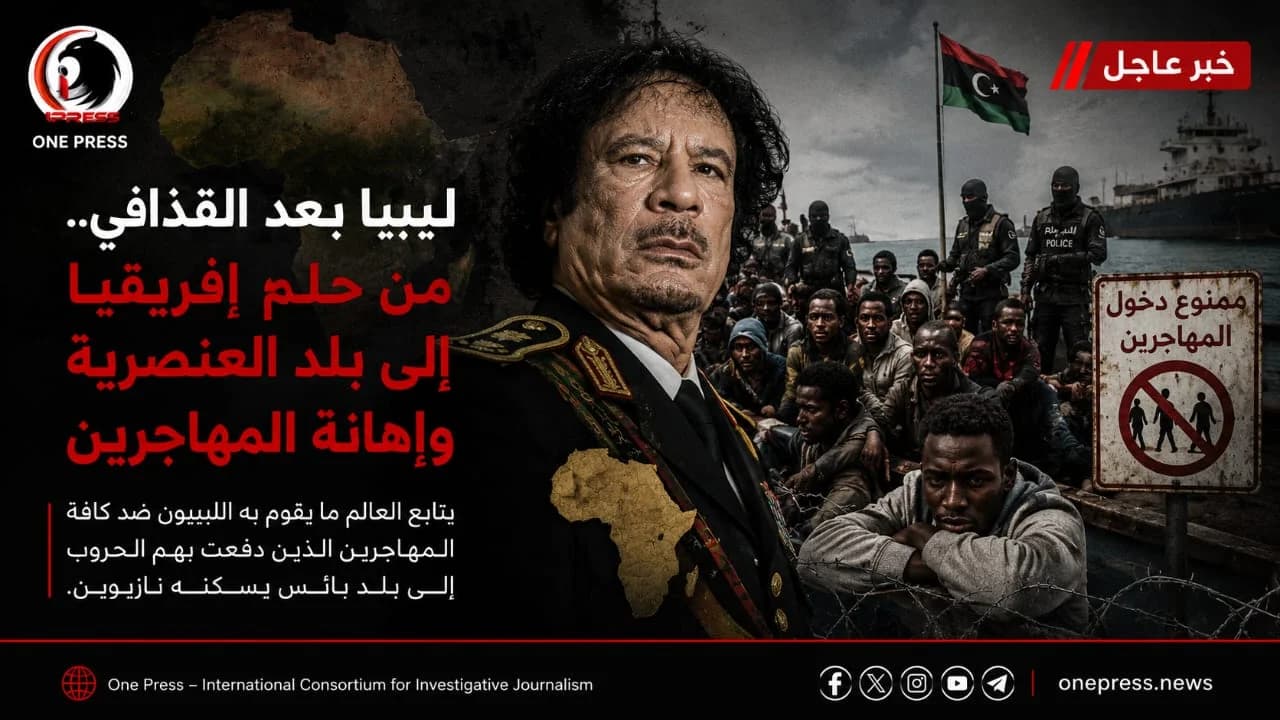
During his years of rule, Gaddafi sought to present himself as the leader of the African continent, and sometimes even to present himself as an African unitary entrepreneur. He advocated for the creation of the United States of Africa, funded projects, federations and organizations within the continent, and provided financial and political support to a number of African governments and movements. Despite widespread debate about his domestic and foreign policies, his African speech remained one of the highlights of his political project in the last two decades of his rule.
“But post-Gaddafi Libya faced an entirely different reality. Instead of becoming a bridge between Africa and Europe, it has become a dangerous transit point for tens of thousands of migrants and refugees fleeing war, poverty and conflict in Africa and the Middle East.
In recent years, human rights reports of serious abuses against migrants inside Libya, including arbitrary detention, exploitation, violence and racial discrimination, have escalated. Media and social media platforms have also seen repeated waves of hostile rhetoric towards migrants, drawing widespread criticism from human rights groups and international bodies.
In this context, the United Nations Support Mission in Libya (UNSMIL) denied the validity of the allegations about the existence of resettlement programs for migrants inside Libyan territory, stressing that these allegations are not based on facts. The mission also warned against the spread of misinformation and hate speech that contribute to fuelling tensions and incitement against personnel of international organizations.
The issue of migration in Libya remains one of the most complex issues, because it overlaps the considerations of sovereignty, security, economy and the human dimension. However, addressing this crisis cannot be based on incitement, generalization or targeting of vulnerable groups, but requires responsible policies and regional and international cooperation that preserve human dignity and safeguard the stability of States at the same time.
“The tragedy of a migrant who has fled war or hunger should not become an instrument of political bidding, and the fears of local communities need realistic remedies based on facts rather than rumours. Between these two sides, Libya is facing a difficult test regarding its image.
Its future and its role are within the African continent, which it has long claimed to lead and speak for.
By: Awadullah Nowai – Director of OnePress Press