
Dongola – OnePress
The Minister of State at the Ministry of Human Resources and Social Welfare and member of the National Mechanism for the Protection of Civilians in Sudan, Salimi Ishaq, described the external support provided to displaced people fleeing the conflict in Darfur and Kordofan as “weak and inadequate”, at a time when the authorities revealed the monitoring of serious violations suffered by civilians during their displacement journey.
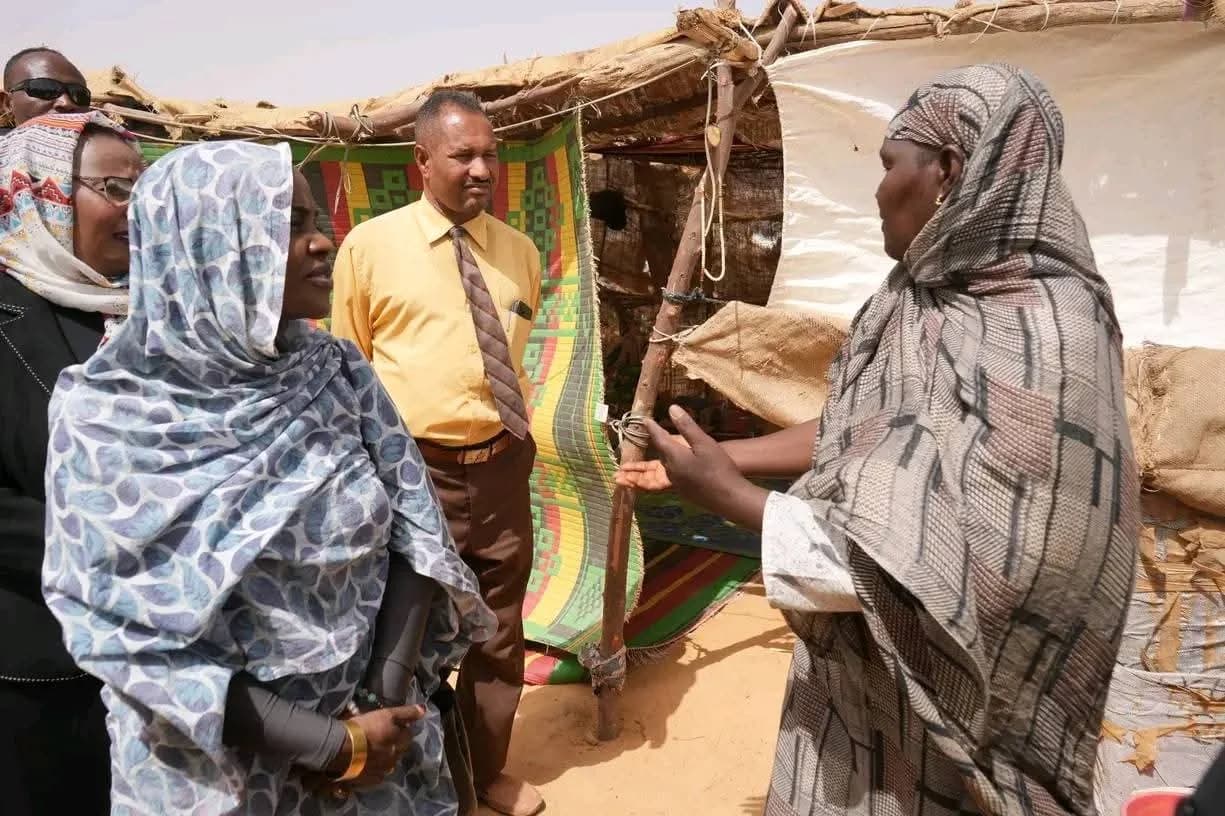
This came during a field visit by the minister to the East Dongola Shelter Center accompanied by an official delegation, where she praised the efforts of the northern state government in hosting and supporting displaced families, stressing the importance of coordination between the executive and security agencies to provide protection and basic services for those fleeing war.
Ishak said the northern state was facing increasing burdens as a result of the continued influx of people from conflict zones, but stressed the commitment of local authorities to continue to provide logistical assistance and expand shelter services despite limited international support.
The minister revealed that the official authorities monitored “gross violations” suffered by displaced people in their areas of origin and during their movement, pointing out that legal and competent committees are currently working to document these violations and inventory the reports related to them.
On the health side, the Director General of the Ministry of Health in charge of the northern state, Yasser Ahmed Abdel-Wadood, announced the operation of field clinics in cooperation with humanitarian organizations and health partners to provide medical care for the displaced, including the follow-up of chronic diseases and the provision of periodic treatments.
For his part, the Executive Director of Dongola Municipality, Mohammed Al-Fateh Tambel, said that the eastern Dongola shelter has so far received 117 displaced families from the provinces of Kordofan and Darfur, stressing the continued coordination with the federal authorities and humanitarian organizations to ensure the stability of health and relief conditions within the shelters.